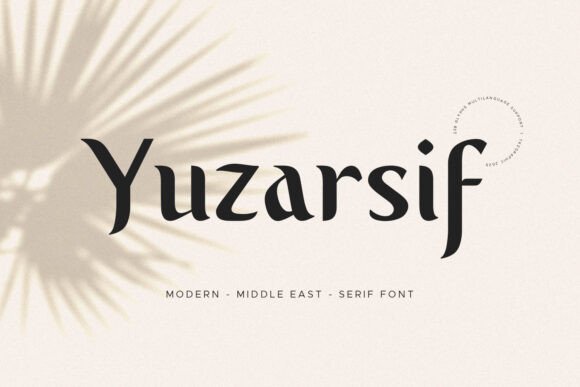
Yuzarsif: A Modern Serif Font for Web Design
It was late on a Friday afternoon when I first placed Yuzarsif into the hero section of a boutique online store I was redesigning. The moment the font rendered, something clicked. It had that perfect balance between classic and contemporary—like a well-worn leather journal meeting a sleek tablet screen. As a web designer, I know how crucial typography is in shaping user experience, and Yuzarsif immediately stood out as a strong candidate for brand-forward websites.
Yuzarsif is a modern serif font that blends classic elegance with a subtle Middle Eastern cultural influence. Its design feels intentional—each stroke carries a sense of refinement without being overly ornate. It’s not just a typeface; it’s a statement about the brand behind it. Whether you're designing a creative portfolio, an online shop, or a course landing page, this font adds a layer of sophistication that instantly elevates the visual identity.
Typography That Works Across Devices
I tested Yuzarsif across multiple screen sizes to see how it handled responsive layouts. On desktops, it looked crisp and confident, especially over image banners where it didn’t compete with the visuals but instead complemented them. On mobile, the font maintained its legibility even at smaller sizes, which is essential for headlines and call-to-action buttons. One thing I noticed was that it performed best when paired with a clean sans serif font for body copy—this combination created a balanced visual hierarchy that guided the reader’s eye naturally through the content.
For example, using Yuzarsif in a product landing page headline made the title feel more personal and inviting, while a simple sans serif like Montserrat worked wonders for the supporting text. This pairing helped create a warm yet professional tone, ideal for brands that want to feel both approachable and trustworthy.
When to Use Yuzarsif in Web Projects
Yuzarsif shines in display roles rather than long-form content. It’s perfect for hero titles, section headings, call-to-action buttons, and decorative accents. I used it on a coaching website's homepage for the main headline and saw how it added a unique character that set the site apart from generic templates. It also worked beautifully in a blog header, where it gave the section a touch of elegance without overwhelming the reader.
However, I found that Yuzarsif isn’t the best choice for long paragraphs or small navigation text. Its serifs, while elegant, can become harder to read at very small sizes or in dense blocks of text. For accessibility-focused projects, it’s better to use it sparingly or pair it with a more readable base font for body copy.
Design Tips for Using Yuzarsif Online
If you're considering Yuzarsif for your next web project, here are a few practical tips based on my testing:
- Use it for headers and titles: Its bold presence makes it ideal for drawing attention to key messages.
- Pair it with a clean sans serif: This helps maintain readability while keeping the design cohesive.
- Test on dark and light backgrounds: Yuzarsif works well on both, but adjust contrast if needed for optimal readability.
- Check for webfont availability: Make sure the font supports all necessary characters and has proper licensing for commercial use.
- Consider file formats: Ensure the font files are optimized for fast loading, especially if your site has a lot of visual assets.
One of the things I appreciated most about Yuzarsif was its versatility. It could be used in a digital brand kit as the primary font for logos and marketing materials, or as a decorative element in a campaign landing page. It’s not just a font—it’s a tool that can shape the emotional appeal and audience engagement of your digital space.
Real-World Examples and Brand Impact
In one case, I used Yuzarsif for a boutique online store selling handmade jewelry. The font gave the brand a sense of artisanal quality and cultural depth, which resonated well with the target audience. The customer reviews mentioned that the site felt more personal and authentic compared to other stores they had visited.
Another instance was on a course sales page. By using Yuzarsif in the headline and subheadings, the design felt more engaging and less corporate. Users were more likely to scan the content and take action, which I believe was partly due to the font’s warm, approachable feel.
Ultimately, Yuzarsif is a font that brings character to any digital project. Whether you're building a portfolio, launching a new online store, or redesigning a brand’s web presence, this typeface offers a blend of style and functionality that’s hard to ignore. Just remember to use it wisely—where it enhances the message, not distracts from it.